Sporting events
Command, fire and communications resources for stadiums, road events, courses and temporary venues.
UK event operations
Experienced commanders, specialist fire cover, event control staff, command units, temporary communications and practical emergency planning for public events across the UK.
Experienced leadership in event control
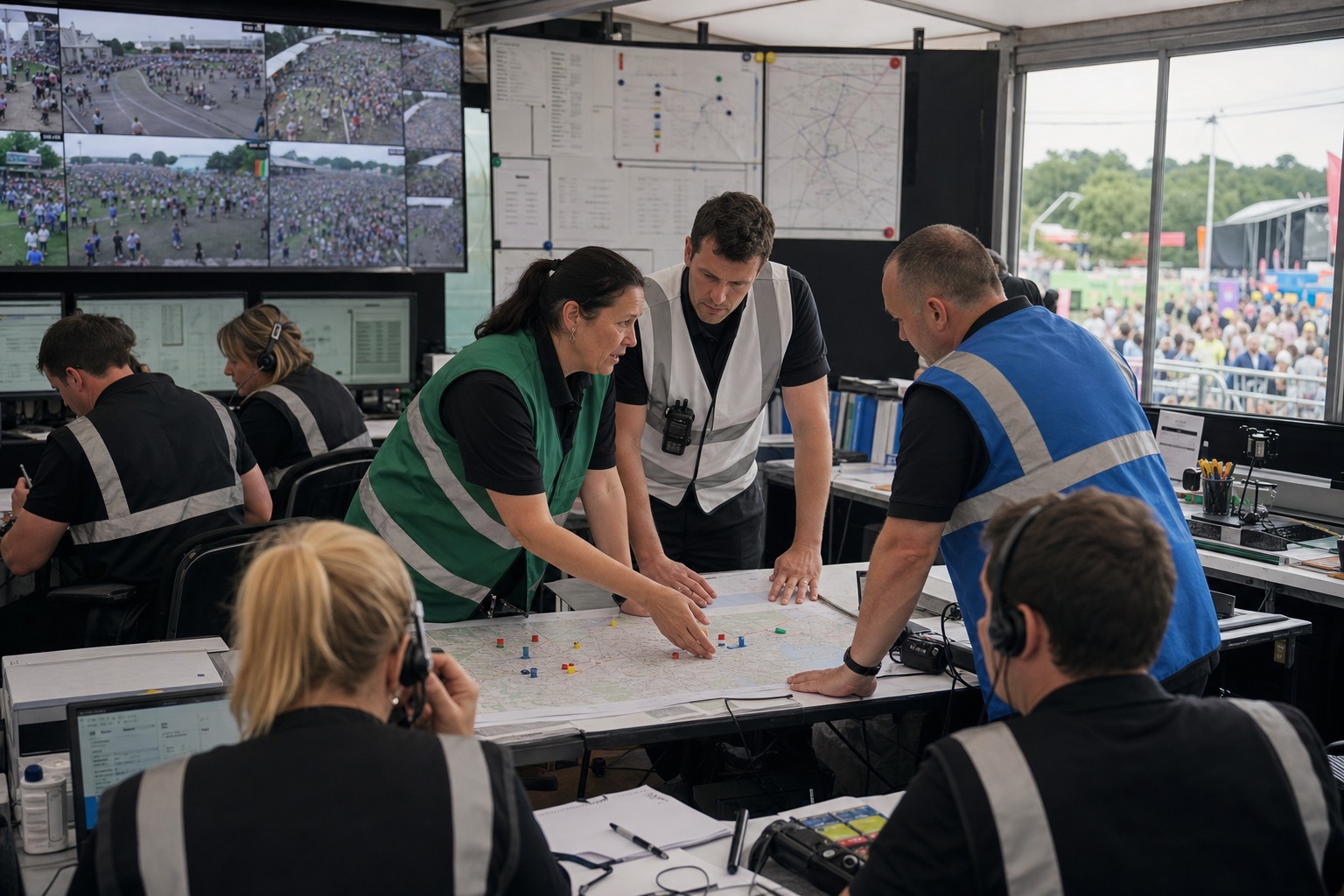
CritiCall can provide experienced Event Medical Commanders, Operational Commanders and Tactical Commanders to support organisers through planning and live event delivery.
Commanders work from the organiser's agreed structure. They build an accurate picture from event control, frontline teams and partner agencies, help prioritise activity and coordinate the resources assigned to their function. Clear decisions and concise communication are particularly valuable when several incidents, programme pressures or access constraints develop at once.
An Event Medical Commander can coordinate the event medical provision and maintain liaison with the wider control team. Operational and Tactical Commanders can support deployment, resource movement and incident management across the venue. The exact role and reporting line are agreed before mobilisation.
CritiCall personnel do not assume statutory emergency-service authority. They support the event organiser, work within the established plan and liaise with public agencies when an incident or escalation requires it.
Dedicated response at the venue
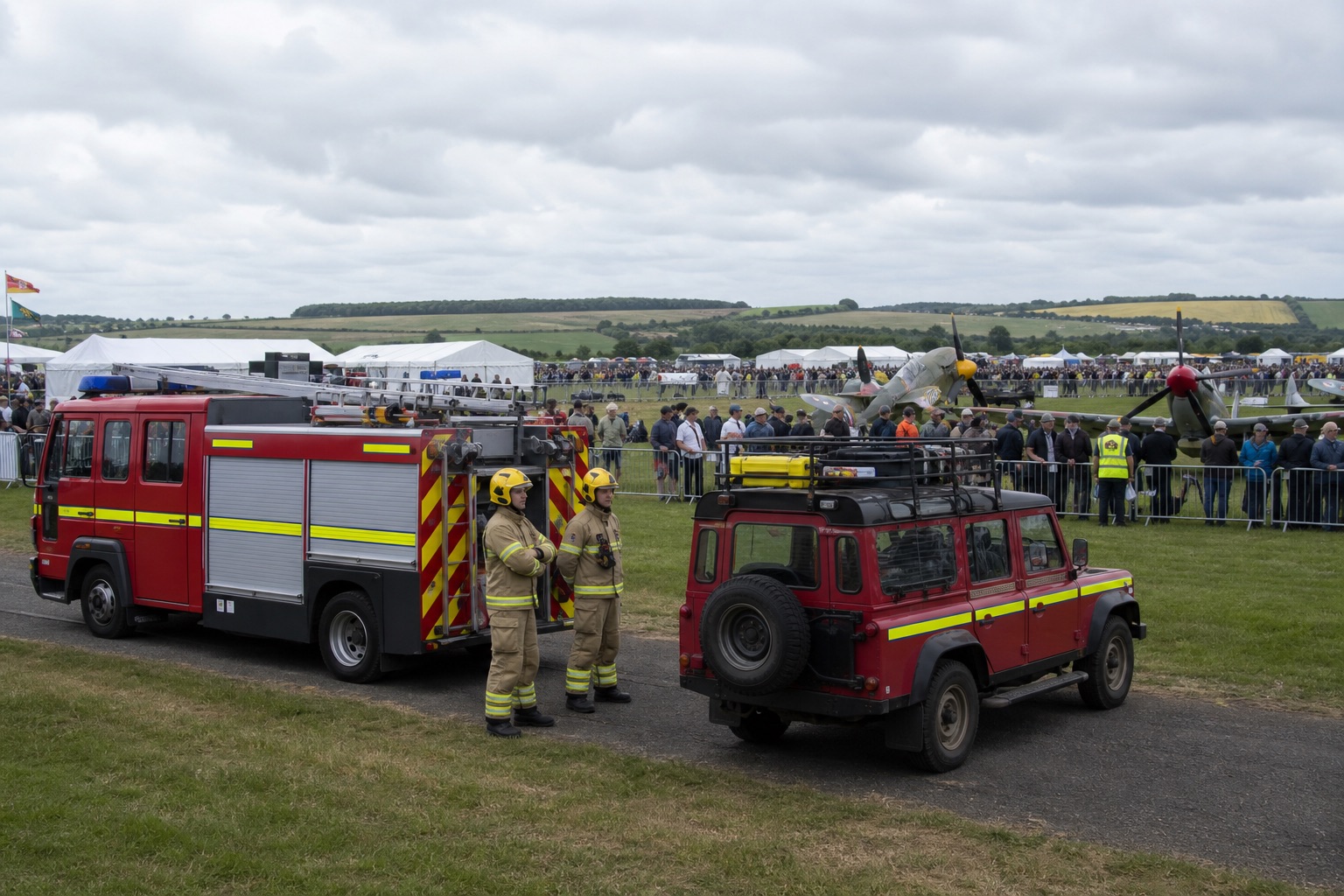
CritiCall provides specialist fire cover for public, sporting, outdoor, corporate and community events, as well as air shows and agricultural shows. The service is scaled around the venue, audience, temporary structures and activities taking place.
Resources can include full-size fire appliances, compact rapid-intervention vehicles, standby crews, patrols and temporary fire stations. Fixed positions may protect specific risks or public areas, while mobile teams cover larger showgrounds, courses and dispersed sites.
Before opening, crews learn the access routes, water supplies, rendezvous points and contact route into event control. During the event they remain ready for fire, rescue or developing incidents and can support the handover to statutory services where attendance is required.
Cover can continue across extended operating hours, build, public opening and break where the organiser's risk assessment identifies a need.

Temporary communications that fit the site
Reliable radio contact connects organisers, stewards, safety teams, production and response resources across busy or dispersed venues. CritiCall can supply digital and analogue two-way radios, temporary repeaters and complete temporary networks for the event period.
Programming reflects the people using the system. Channels and talk groups can separate routine teams while preserving clear routes to event control and priority functions. Equipment issue, charging and user information can be incorporated into the deployment.
Coverage surveys help identify where terrain, buildings or distance may affect performance. Repeater sites and network layout can then be selected around the venue rather than discovered after the public arrives.
Event communications planning also considers callsigns, escalation routes and how controllers will direct traffic during an incident. The aim is a usable system, not unnecessary technical complexity.
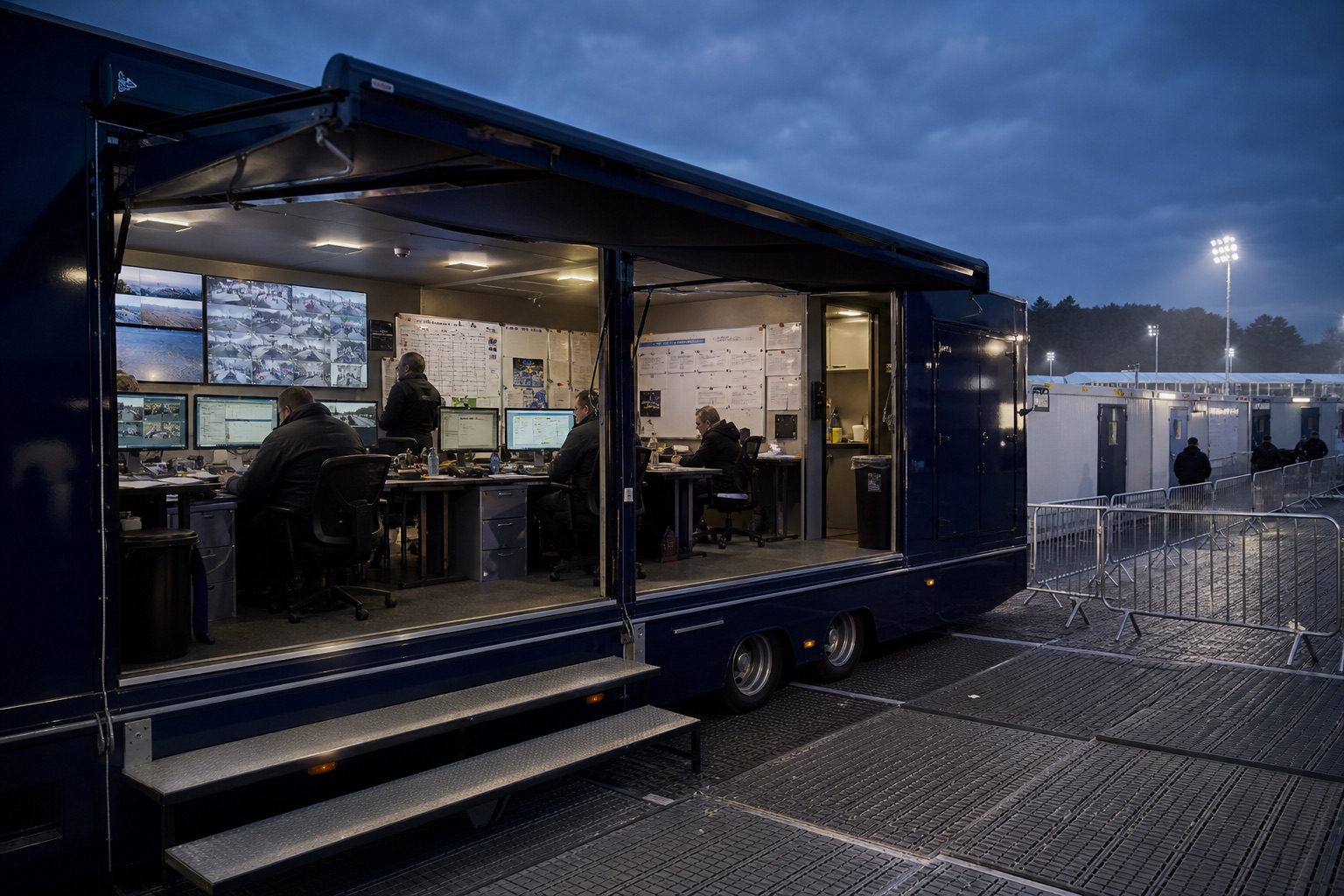
A deployable control facility
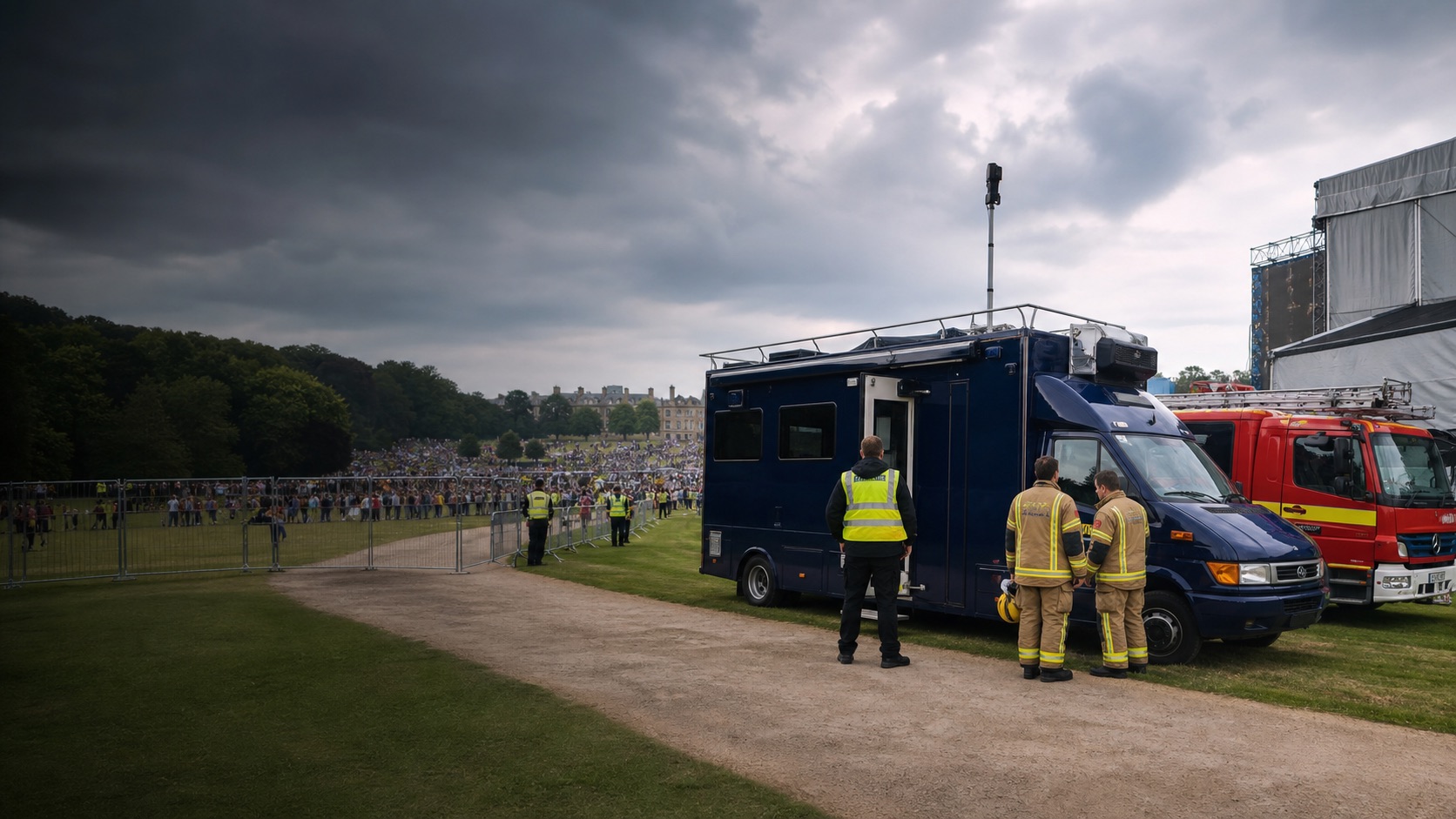
A mobile command unit provides a professional working base for event control, incident command and resource coordination when permanent facilities are unavailable or unsuitable.
Units can provide planning space, radio positions, situation boards, welfare facilities and CCTV integration where available for the selected vehicle and event systems. The layout gives operators and commanders a common place to receive information and maintain the event picture.
CritiCall can supply the vehicle only, provide a unit with radio operators, dispatchers or incident loggists, or deliver fully staffed command support. The selected option is agreed against the organiser's staffing plan so responsibilities remain clear.
The command unit can serve as the principal event-control facility, a specialist coordination point or a resilient fallback. Site position, power, connectivity, access and welfare are considered before arrival.
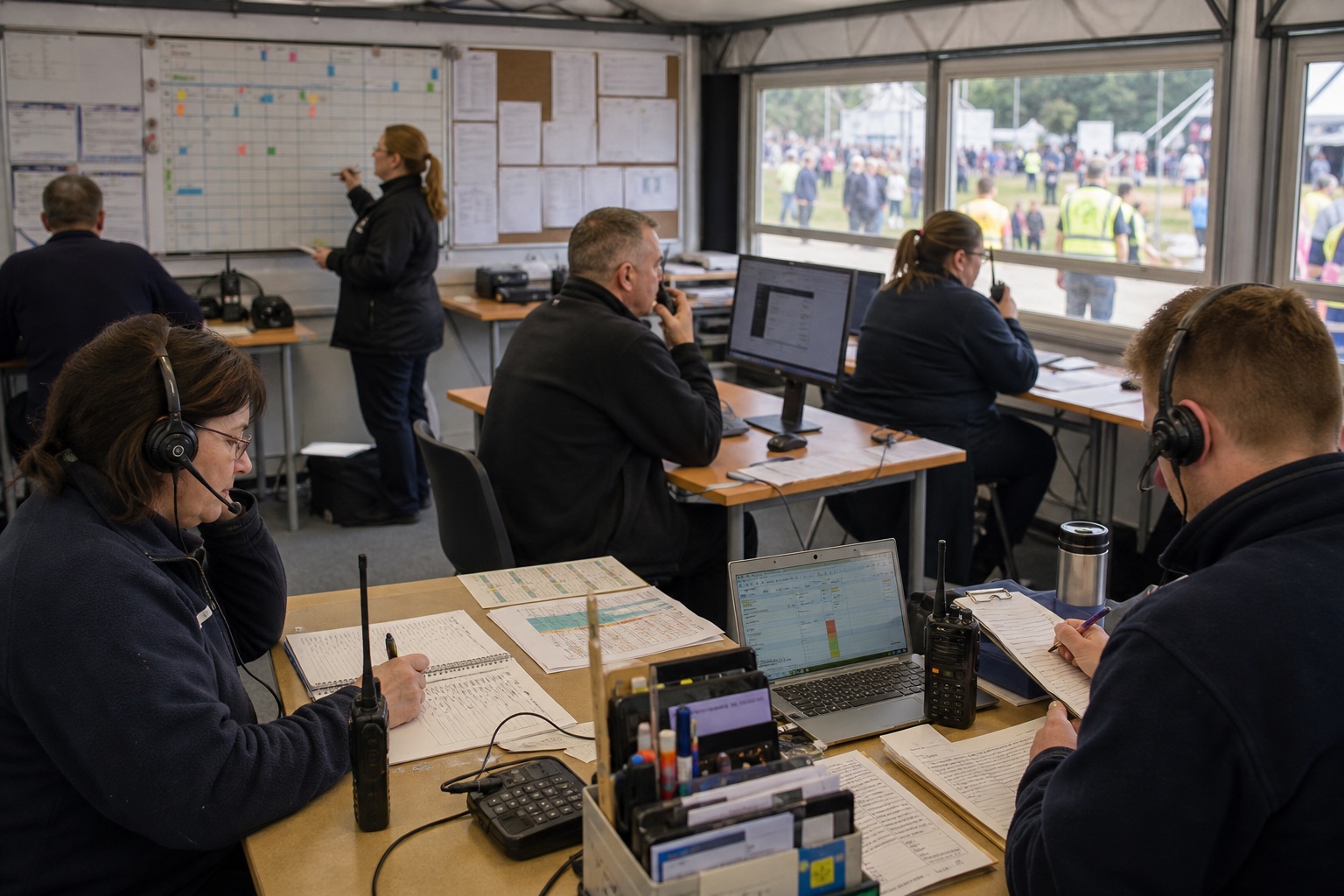
People who keep information moving
A command facility depends on staff who can receive calls, record decisions and send resources without losing important detail. CritiCall can provide incident loggists, radio controllers, dispatchers, event-control staff and communications coordinators for agreed roles.
Radio controllers monitor the assigned channels, pass messages to the right function and keep urgent traffic clear. Dispatchers allocate or move resources under the direction of the responsible commander. Loggists create a chronological record of reports, decisions and actions that helps the team maintain a shared event picture.
Communications coordinators can support radio issue, channel information, faults and the relationship between operational users and event control. Together, these roles allow commanders to focus on decisions while controllers and loggists maintain the flow of information around them.
Staff can work inside a CritiCall command unit or an organiser's existing control room, subject to the agreed equipment, access and procedures.
Support before opening
CritiCall can help organisers present and deliver practical fire, medical, command and communications arrangements through the event-planning process.
Support can include attendance at Safety Advisory Group meetings, event emergency planning and liaison with the local authority and relevant Fire and Rescue, ambulance and police representatives. The emphasis is on providing clear information about the proposed resources and receiving the details the deployed team needs.
Fire and medical planning can be brought into the wider event-control structure so commanders, frontline teams and partner agencies understand contact routes, escalation and access. Site surveys can help confirm posts, routes, rendezvous points and temporary facilities.
CritiCall supports the organiser's agreed event plans and does not imply approval authority. Decisions belonging to the organiser, local authority or statutory services remain with those bodies.
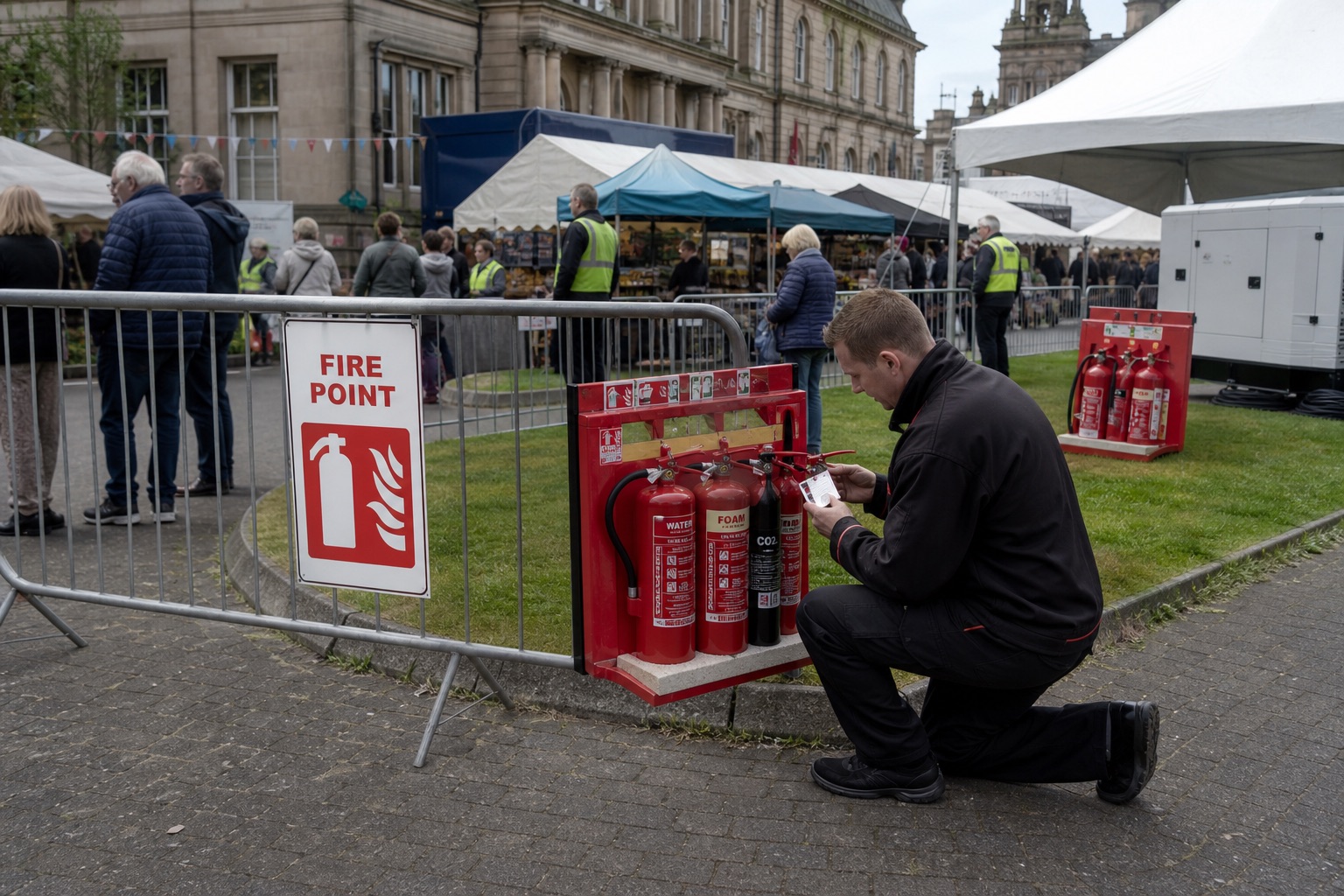
Temporary fire-safety infrastructure
CritiCall can supply fire extinguishers, fire points and temporary event fire equipment for stages, concessions, production areas, generators, hospitality and public spaces.
Equipment is selected and positioned around the activity and site plan. Strategic placement helps keep fire points visible and accessible without obstructing pedestrian movement, exits or service routes.
For multi-day events, agreed servicing and inspections can identify missing, discharged, damaged or obstructed equipment. Replacement and repositioning can then be coordinated through the organiser's nominated contact.
An equipment schedule gives event teams a useful reference during build, public opening and break, and supports the final collection and accounting process.
Define the provision
A useful assessment connects the audience, venue, programme and temporary infrastructure to the medical and fire resources needed for the event.
CritiCall can prepare Event Medical Needs Assessments and Fire Risk Assessments, undertake operational risk reviews and support temporary event fire planning. The work considers the information supplied by the organiser, findings from the site and the arrangements already in place.
Assessments can inform medical posts, staffing considerations, fire resources, temporary equipment, access, emergency routes and escalation. Recommendations remain proportionate to the event and are written to support practical delivery.
These services do not imply statutory approval. The organiser remains responsible for its event, and any formal approval or regulatory decision remains with the relevant authority.
Across the UK
Command, fire and communications resources for stadiums, road events, courses and temporary venues.
Integrated fire, command and control-room provision for day, multi-day and camping events.
Fire cover, command facilities and communications across public, display and operational areas.
Response resources for showgrounds, displays, temporary structures and public zones.
Scalable provision for town, park and neighbourhood events with temporary infrastructure.
Discreet command, fire and communications services for guests, venues and production teams.
Fire equipment, control staff and emergency planning for indoor and outdoor exhibition sites.
Coordinated resources for civic occasions, celebrations and high-footfall public spaces.
Site-specific fire, communications and command provision across open and temporary venues.
Proportionate support for fundraising walks, sporting challenges and public gatherings.
From enquiry to debrief
A coordinated event resource
Leadership, fire cover, control-room staff and communications can be shaped around the event rather than supplied as disconnected services.
Commanders who support clear decisions and resource coordination.
Fire crews and vehicles selected for public and temporary venues.
Vehicle-only, operator-assisted and fully staffed options.
Temporary networks, repeaters, programming and coverage surveys.
Flexible resources for events across the United Kingdom.
Individual services or a coordinated package around the organiser's plan.
Start an enquiry
Share the event type, venue, dates, attendance, programme and current fire, medical, command and communications plans. We will help define the resources needed.